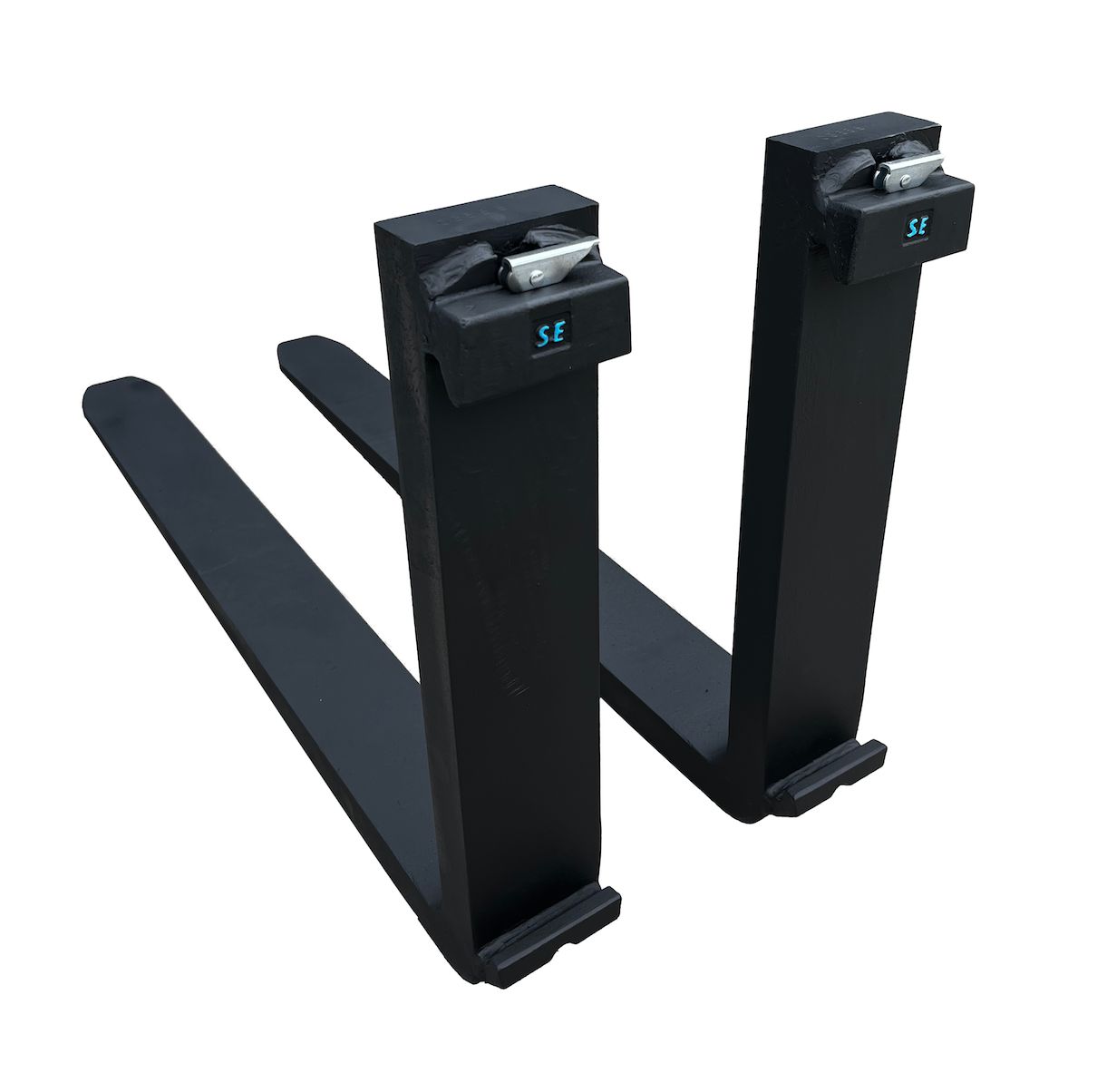
In short: Forklift forks are a fork pair hung on the forklift's FEM carriage, used to lift pallets and goods. Most forklifts already come with forks, but they wear, bend, or don't suit every load. Then a new or different fork is needed.
What are forklift forks and how do they attach to the forklift?
Forklift forks consist of two tines hung on the hooks of a FEM-standard carriage and locked into place. The FEM class (for example FEM 2 or FEM 3) determines which fork size fits the carriage.
- Tine length: must suit the typical pallet and load depth - a tine that's too short won't support the load adequately.
- Load capacity: the forks must withstand the typical load weight, which is distributed between the tines.
- Adjustable tine spacing: allows lifting pallets of different widths.
See the range on our forklift forks page.
When aren't the original forks enough?
- The forks are worn or bent: over time, the tines develop bends from the load, which reduces capacity and safety.
- You need a different length: when lifting bigger or longer pallets than the original forks were designed for.
- The forks were wrongly matched to the machine: for example, a used forklift was bought without forks or with a different FEM class fork.
Forklift forks versus fork extensions
If the existing forks are fine but loads are occasionally longer, there's no need to buy new forks straight away. The solution is fork extensions, which slide over the existing forks and temporarily extend them. These suit occasional lifting of longer loads; for everyday use, longer forks are still the better choice.
What should you think about before buying?
- FEM class compatibility: the forks must exactly match the forklift carriage's FEM class.
- Load capacity and usage load: check that the forks' load capacity matches the typical load you work with.
- Condition of the mounting hooks: if the carriage has play, see also our FEM carriage pins article, which may solve the problem before buying new forks.
We'll help you choose
Tell us the forklift's make, model and FEM class, and what loads you typically lift. We'll recommend the right forks. Get in touch via our contact page.
Tell us your machine's make and model - we'll help you find the right attachment. We are the official importer of SE Equipment in Estonia.