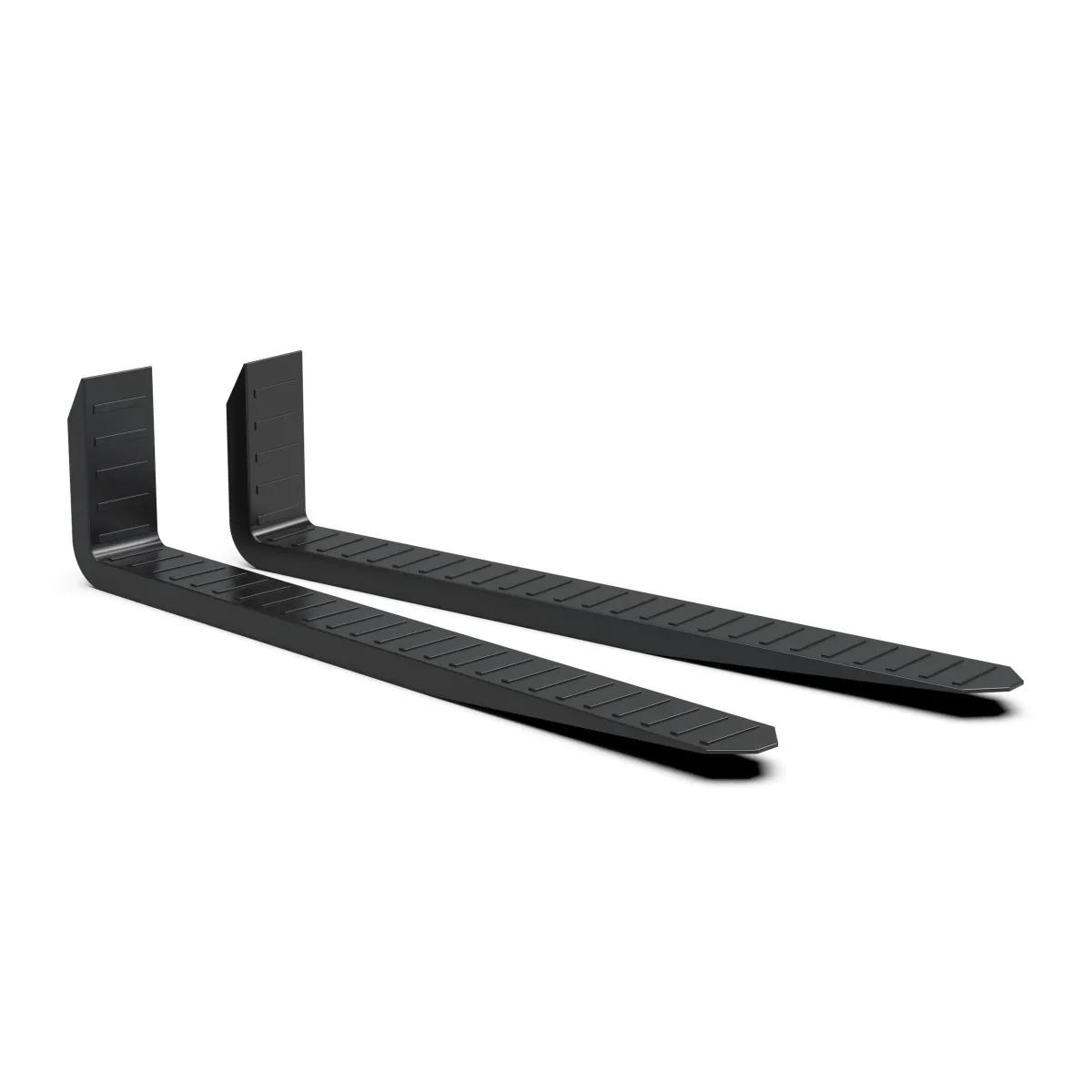
In short: Fork protection sleeves are rubber covers that slide over the forklift's forks. They protect the cargo being transported from scratches and protect the forks themselves from wear, impacts and corrosion. The right choice depends on the fork's width, thickness and length, which you need to measure before ordering.
Why cover the forks with rubber?
A bare steel fork easily leaves a mark on an unprotected surface. When transporting furniture, cars, sheet metal roofing material or lacquered parts, that mark can mean returned goods or a warranty dispute with a customer. A rubber sleeve spreads the weight of the load more gently and reduces direct contact between the metal and the cargo.
The cover also protects the fork itself. Fewer scratches and corrosion spots extend the fork's lifespan, especially when working in damp or salty environments.
Where do protection sleeves get the most use?
- Furniture manufacturing and warehousing: transporting furniture and panels with finished surfaces.
- Automotive industry: body parts, painted components, glass.
- Metal industry: parts with polished or lacquered metal surfaces.
- Food industry and hygiene-sensitive areas: the cover keeps the fork cleaner and the surface smoother.
How to choose the right size?
The protection sleeve's inner dimensions must match the fork's dimensions, not just be roughly close. Measure the fork's width, thickness and length precisely, since a sleeve that's too loose will slip and wear out quickly, while one that's too narrow won't go onto the fork at all.
- Width and thickness: dimensions must match the fork's cross-section, not just an estimate by eye.
- Length: the cover doesn't need to cover the fork from tip to end, but must reach the area where the load rests the most.
- Material: harder rubber withstands sharp edges better, softer rubber suits delicate-surface cargo better.
Common mistakes
- Measuring by eye: the same forklift model can have different forks across different model years.
- Forgetting to secure it: the protection sleeve must be fixed onto the fork, not just slid on, otherwise it shifts during driving.
- Wrong placement: if the load rests on the tip of the fork but the cover only covers the middle section, you won't get the expected protection.
If you want to extend your forks, also check our article on FEM frame bars, which explains what fork-carriage compatibility depends on. You'll find all protection sleeves here. Send us your fork dimensions and we'll suggest the right protection. For questions, contact us via our contact page.
Tell us your machine's make and model - we'll help you find the right attachment. We are the official importer of SE Equipment in Estonia.