In short: A loading bucket is designed for easily scooping up and loading material, a digging bucket is stronger and better shaped for penetrating soil. Some jobs can be done with the wrong bucket, but the result and the wear are worse.
Loading bucket - for handling light material
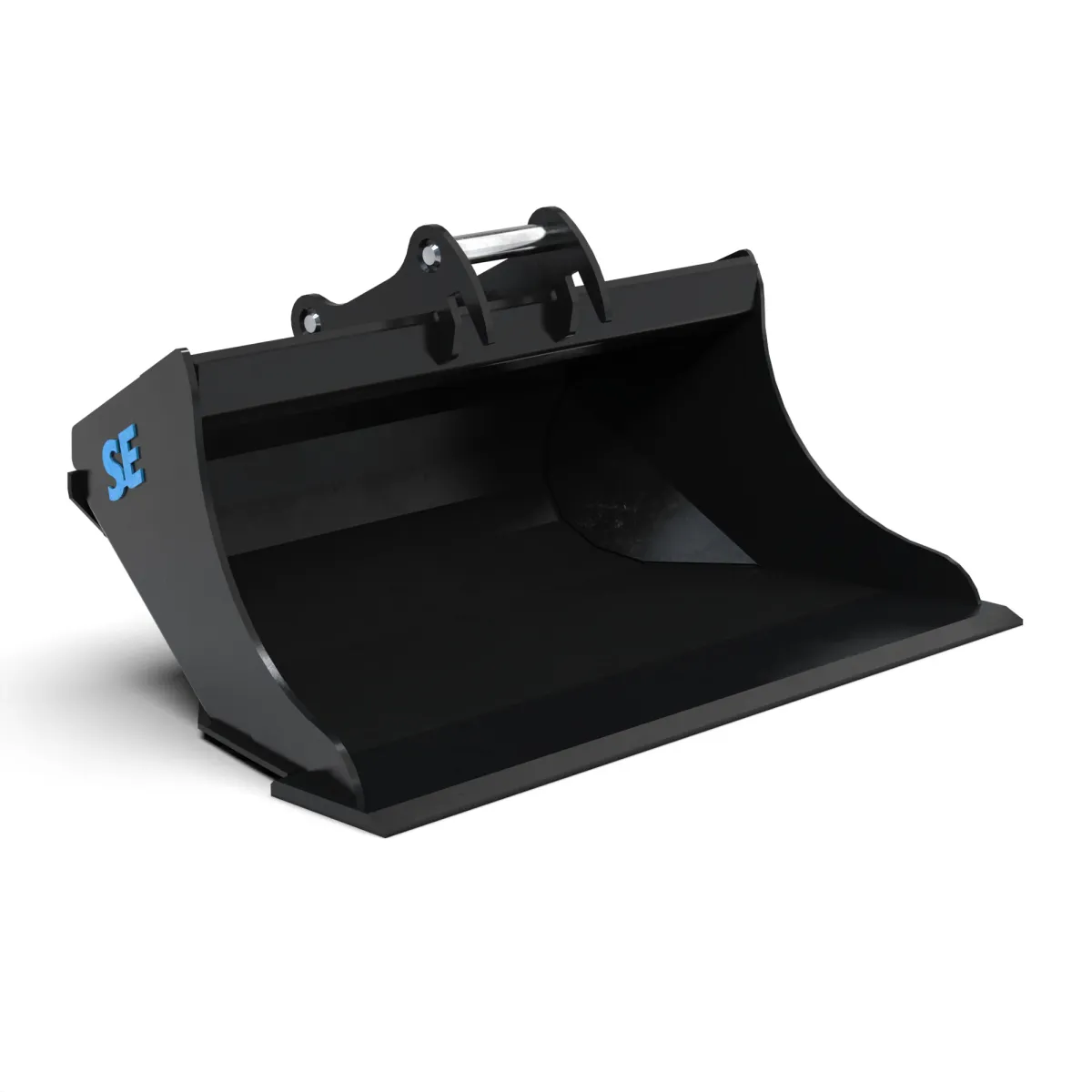
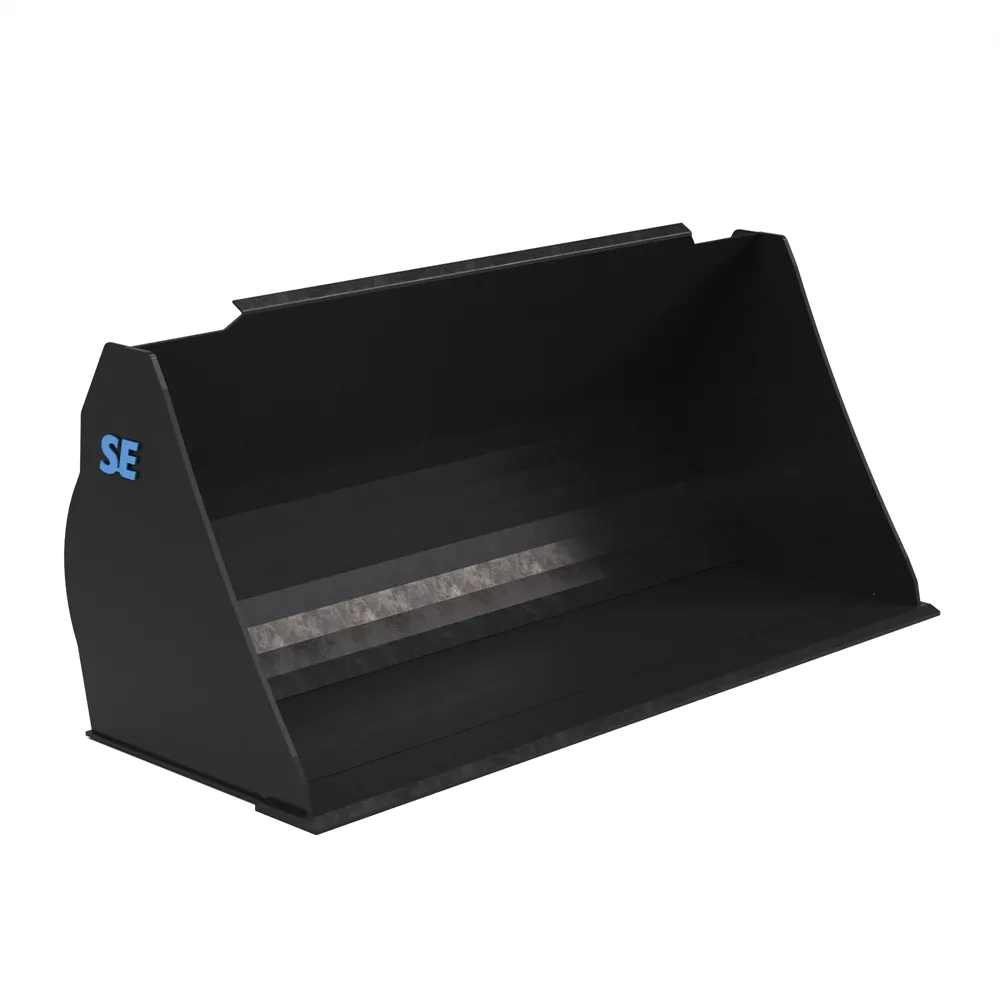
A loading bucket is lower and wider, usually with a straight or slightly curved bottom, so material slides out of it easily. It's used mainly for scooping up and unloading material that's already loose, for example sand, aggregate, wood chips or mulch, rather than digging directly out of the ground.
- Advantage: quick emptying of material and good visibility from the edge of the bucket.
- Disadvantage: less suited to digging compact, hard ground, since the bucket doesn't penetrate soil as well.
See the range on our loading buckets page.
Digging bucket - for digging and more compact material
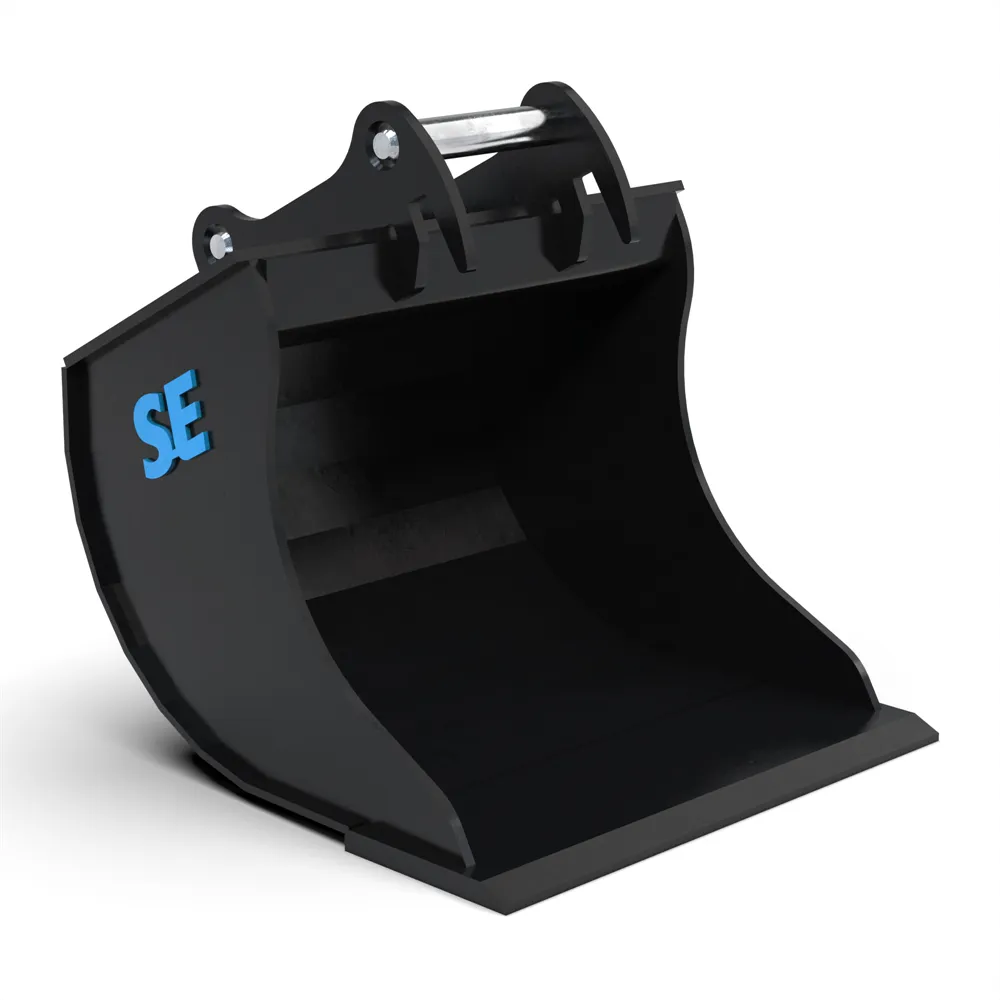
A digging bucket has a stronger structure and often has teeth that help it penetrate the ground. It's designed for both digging and loading, but with the emphasis on digging.
- Advantage: penetrates hard and stony ground better, more durable under heavy use.
- Disadvantage: empties slightly slower in loading work than a smooth loading bucket.
See the range on our digging buckets page.
Does one bucket work for both jobs?
If the work is a mix - sometimes digging, sometimes loading - a digging bucket can also handle loading work, although it's not as fast as a proper loading bucket. The reverse isn't sensible though: digging with a loading bucket wears the bucket out faster and penetrates hard ground poorly.
- Mainly digging: choose a digging bucket, even if you occasionally load as well.
- Mainly loading finished material: choose a loading bucket, it does the job faster and saves the digging bucket's teeth.
- A lot of both: consider having two separate buckets, if the company has several machines or several operators working at once.
A common mistake
The most common mistake is starting to use a loading bucket for constant digging, since it seems to work just as well at first. In the long run, the bucket and its edges wear faster, and work in hard ground becomes slow even before the bucket looks visibly worn from the outside.
Tell us the proportion of digging to loading you do, and we'll recommend whether one bucket is enough or whether two separate buckets are worth considering. Get in touch via our contact page.
Tell us your machine's make and model - we'll help you find the right attachment. We are the official importer of SE Equipment in Estonia.