In short: A bucket's width doesn't have to be exactly the same as the machine's width, but a big difference affects both stability and the work result. In trenching, the bucket is often narrower than the machine, while in loading work it's wider - it's important to understand when each shape is right.
Why bucket width matters at all
Bucket width directly affects two things: how much material moves at once, and how the load is positioned on the machine. A bucket that's too wide takes on more force and weight than the machine is built to carry, while one that's too narrow does the same job over more cycles, which stretches out the time spent.
Trenching work - the bucket can be narrower than the machine
In trenching and cable-line digging, it's common for the bucket to be narrower than the machine's body. A narrower bucket leaves a smaller trench, which reduces the amount of soil that needs to be dug out and later backfilled. This is useful when the object being buried, for example a cable or pipe, doesn't need a wide trench.
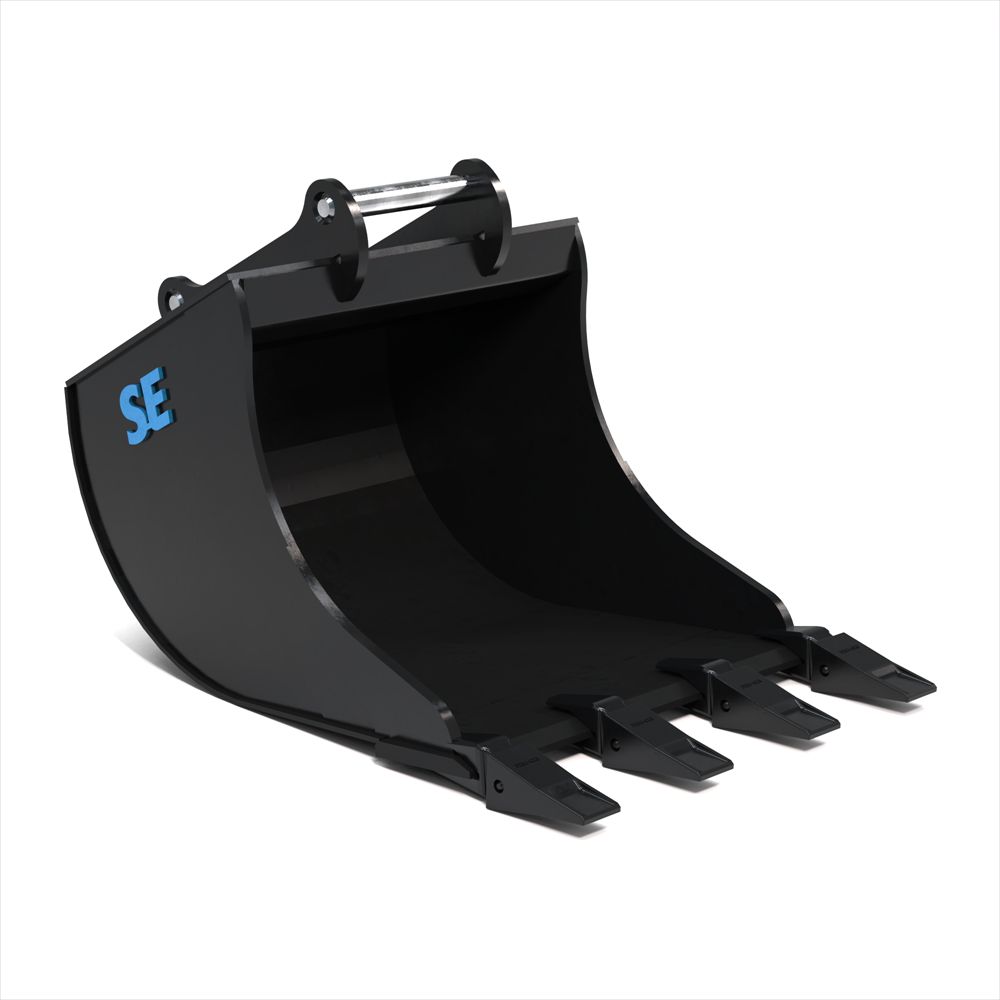
- Cable bucket: typically considerably narrower than the machine's body, good for pipes and cables.
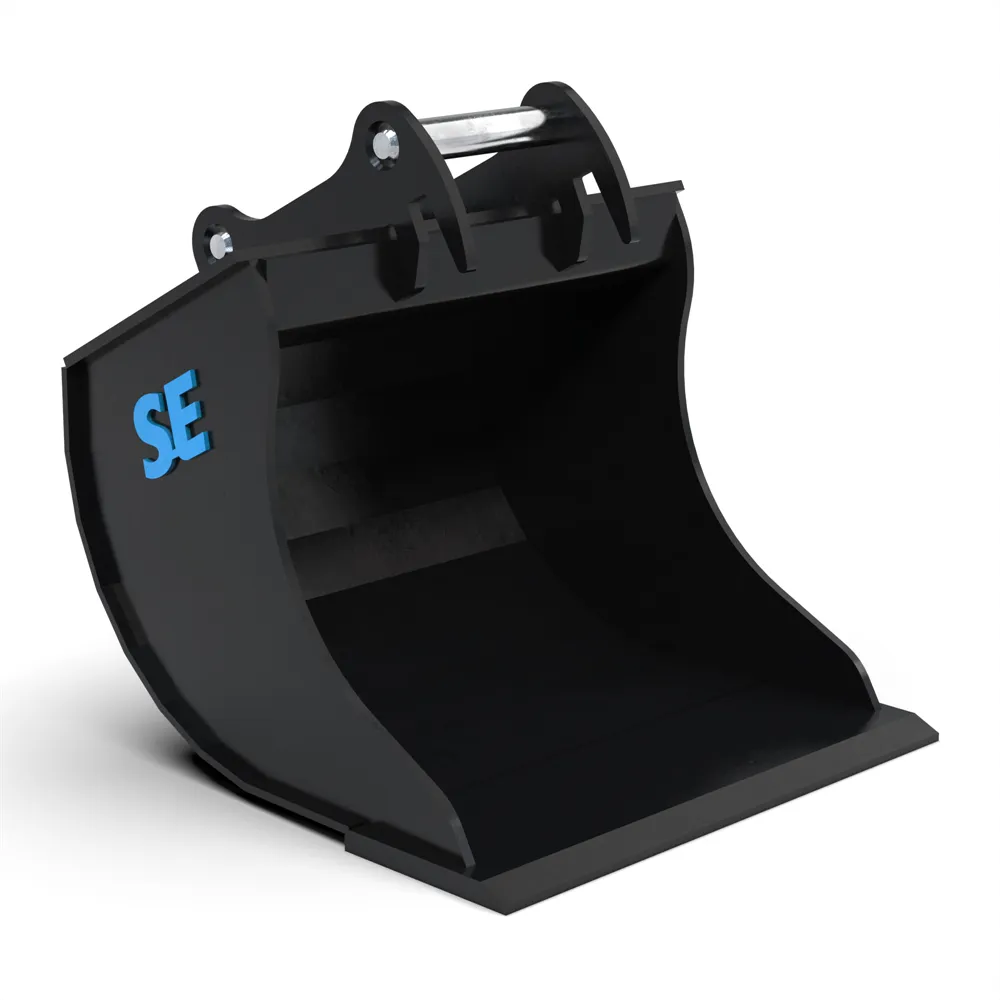
- Digging bucket: medium width, for general-purpose digging and loading, see our digging bucket range.
Loading work - a wider bucket matters for speed
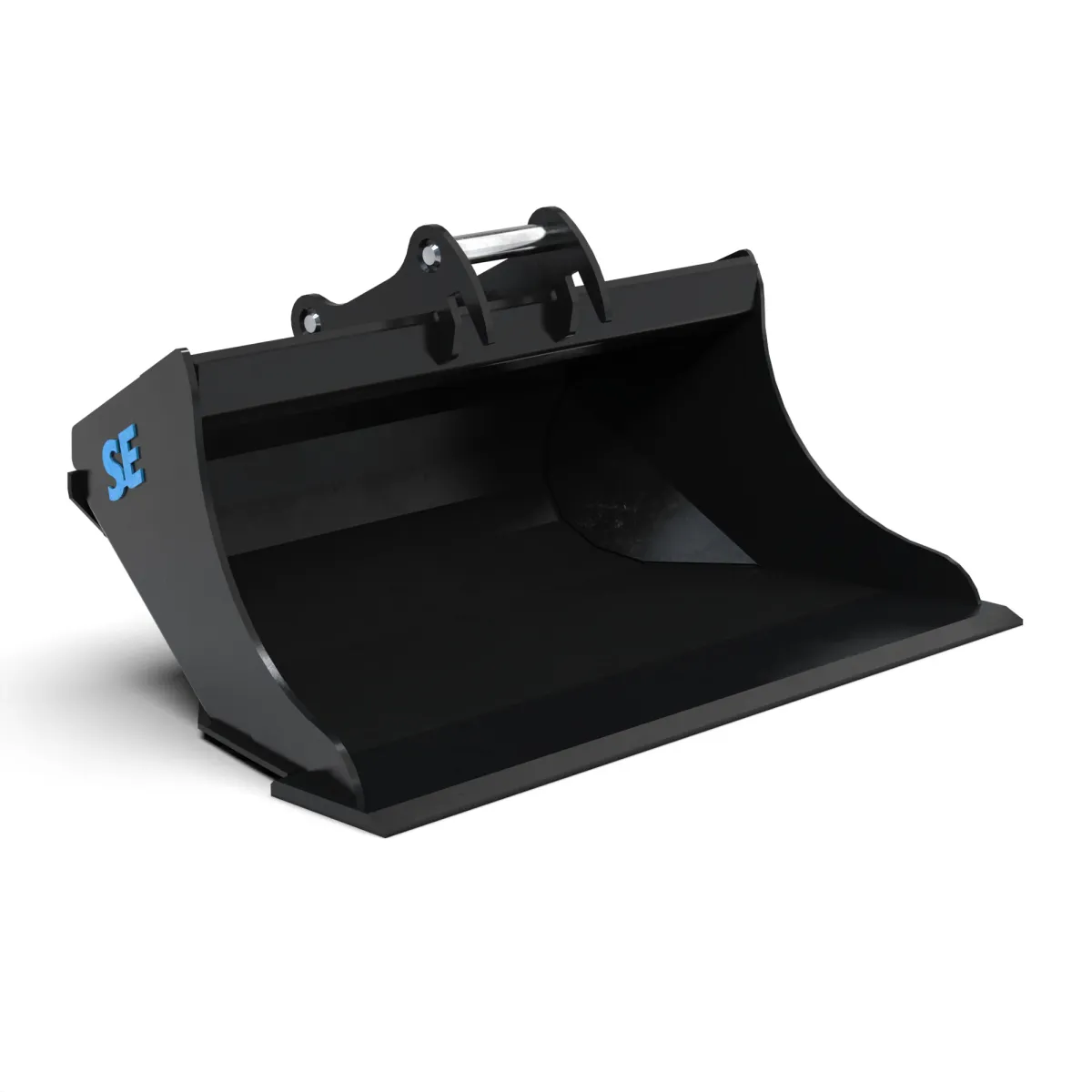
For loading and leveling material, where the goal isn't a narrow trench but a large, even surface, it's worth considering a bucket wider than the machine's body. A wider bucket moves more material at once and levels a wider track, which speeds up work when leveling and clearing a site.
When a wide bucket becomes a problem
- Stability: a bucket that's too wide and full can make the machine unstable, especially with the boom extended or the machine standing on a slope.
- Power: a wider bucket needs more force to penetrate the ground, and the machine can easily struggle in hard soil.
- Maneuvering: in tight spots, for example between fences and buildings, a wide bucket makes the work difficult or impossible.
How to decide correctly
The most reliable starting point is the recommended bucket volume and width given in the machine manufacturer's manual. If that's not known, go by the type of work: narrower for trenching, wider for loading and leveling, but not beyond the machine's actual lifting capacity.
Tell us the machine's make, model and the work you're planning, and we'll recommend a bucket with the right width. Get in touch via our contact page.
Tell us your machine's make and model - we'll help you find the right attachment. We are the official importer of SE Equipment in Estonia.